Annular Drills: efficiency, precision and productivity in industrial drilling.
Brocas Anulares: eficiência, precisão e produtividade na perfuração industrial.
Em processos industriais, a perfuração precisa vai muito além de abrir um furo. Ela impacta diretamente a qualidade do acabamento, o tempo de execução, a durabilidade das ferramentas e os custos operacionais. Nesse contexto, as brocas anulares se destacam como uma solução altamente eficiente para aplicações que exigem precisão, desempenho e produtividade.
Neste artigo, você vai entender o que são as brocas anulares, como elas funcionam, quais são seus principais benefícios e por que são amplamente utilizadas em operações industriais que demandam alto rendimento e confiabilidade.
O que são brocas anulares ?
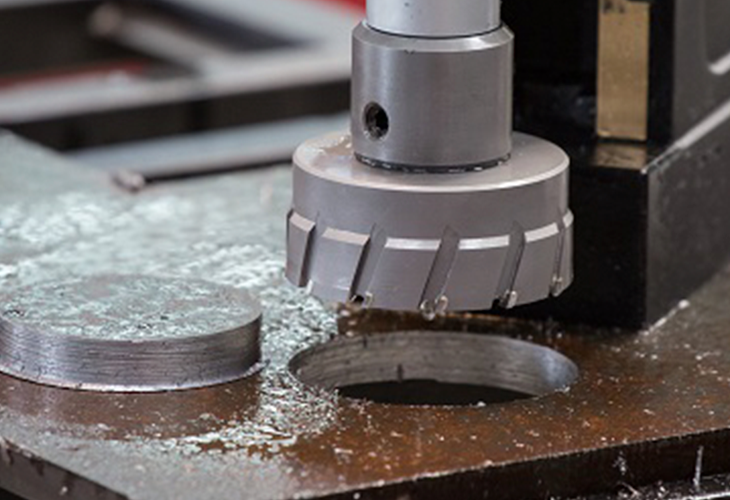
As brocas anulares são ferramentas de perfuração desenvolvidas para realizar um corte circular, removendo apenas a periferia do material e preservando o núcleo interno. Diferente das brocas convencionais, que removem todo o material do furo, as brocas anulares realizam um corte inteligente, mais rápido e eficiente.
Esse tipo de broca é amplamente utilizado em conjunto com furadeiras de base magnética, formando uma combinação ideal para aplicações industriais que exigem precisão, estabilidade e alto desempenho.
Como funciona o sistema de corte das brocas anulares.
O funcionamento das brocas anulares é baseado em dentes de corte distribuídos ao redor da ferramenta. Esses dentes realizam a perfuração apenas na área necessária, reduzindo o esforço mecânico e o consumo de energia.
Como resultado desse processo:
- o tempo de perfuração é reduzido.
- o aquecimento é menor.
- o acabamento do furo é superior.
- há menor desgaste da ferramenta.
Esse sistema garante maior controle da operação e mais estabilidade durante a perfuração, mesmo em materiais metálicos espessos.
Precisão dimensional e qualidade do acabamento.
Um dos grandes diferenciais das brocas anulares é a precisão dimensional dos furos. Como o corte é mais controlado e estável, o diâmetro final permanece dentro das especificações, evitando folgas, desalinhamentos ou a necessidade de retrabalho.
O acabamento mais limpo e uniforme é essencial em aplicações industriais onde os furos precisam receber parafusos, pinos, rebites ou outros elementos de fixação com alto nível de precisão.
Redução de esforço da máquina e aumento da vida útil.
Por remover menos material durante a perfuração, as brocas anulares exigem menos esforço do equipamento. Isso reduz a carga sobre o motor, diminui vibrações e contribui para a preservação da máquina.
Among the main benefits are:
- maior vida útil da broca.
- menor desgaste do equipamento.
- redução de paradas para manutenção.
- maior constância no desempenho.
Esses fatores impactam diretamente a produtividade e os custos operacionais da indústria.
Ganhos de produtividade no ambiente industrial.
A eficiência das brocas anulares se reflete em ganhos significativos de produtividade. Com perfurações mais rápidas e precisas, o tempo total de execução das tarefas é reduzido, permitindo maior volume de produção em menos tempo.
Além disso, a redução de retrabalhos e desperdícios de material contribui para processos mais enxutos e econômicos, especialmente em operações industriais de grande escala.
Principais aplicações das brocas anulares.
As brocas anulares são amplamente utilizadas em diversos segmentos da indústria, como:
- manutenção industrial.
- estruturas metálicas.
- caldeirarias e fabricação pesada.
- indústrias metalúrgicas e siderúrgicas.
- setores de óleo e gás.
- montagem industrial.
Sua versatilidade permite o uso tanto em ambientes industriais fixos quanto em operações em campo.
Quando optar por brocas anulares.
As brocas anulares são indicadas sempre que a operação exigir:
- alta precisão na perfuração,
- maior produtividade,
- menor desgaste das ferramentas,
- melhor acabamento dos furos,
- redução de esforço da máquina.
Em comparação com brocas convencionais, elas oferecem mais eficiência, controle e confiabilidade, sendo a escolha ideal para aplicações industriais exigentes.
Talk to an ITAL specialist about your application.
If this content raised a practical need, our team can indicate the best solution for your operation.