Magnetic Base Drills: how stability influences precision in industrial drilling.
In industrial environments, drilling precision is a decisive factor for the quality of work, operational safety and team productivity. Small variations in equipment alignment or stability can generate rework, material waste and even operational risks. In this scenario, magnetic base drills are consolidated as essential solutions for applications that require absolute control, firmness and high performance.
In this article, you will understand in depth how magnetic stability directly impacts the precision of industrial drilling, what are the differences between this type of equipment and why it is widely used in industrial maintenance, metallic structures and heavy manufacturing.
What is a magnetic base drill?
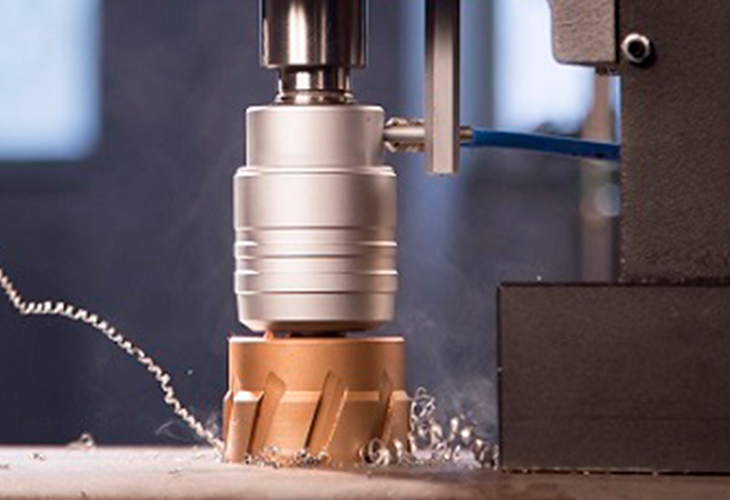
A magnetic base drill, also called an industrial magnetic drill, is equipment specifically designed to perform precise drilling on surfaces metallic. Its biggest difference is the high-power magnetic base, responsible for fixing the machine directly to the workpiece.
This fixation creates a firm connection between the equipment and the drilled material, ensuring stability throughout the operation. Unlike conventional drills, which depend exclusively on the strength of the operator or auxiliary supports, the magnetic base drill maintains its positioning even under continuous effort.
Another important point is versatility. This type of equipment can be used in horizontal, vertical, inclined and even inverted positions, which is essential in large metallic structures, field maintenance and difficult-to-access locations.
How magnetic stability influences drilling accuracy.
Stability is one of the pillars of precision in industrial drilling processes. The magnetic base generates intense clamping force, which drastically reduces vibrations, displacements and micro movements during operation.
With this stability:
- the drill axis remains aligned.
- the hole diameter remains within specifications.
- there is less risk of deviations.
- the final finish is more uniform and precise.
In industrial applications, especially in thick sheets and metal structures, any instability can compromise the fit of screws, pins, rivets or structural components. Magnetic clamping eliminates this risk and guarantees repeatability of results.
Reduced vibration and increased tool life.
Excessive vibration is one of the main causes of premature wear of drills and industrial equipment. By keeping the machine firmly fixed to the metal surface, the magnetic base drill significantly reduces this impact.
As a consequence:
- there is less wear on the drills.
- the useful life of the tools increases.
- engine effort is reduced.
- machine performance remains constant over time.
This factor is especially relevant in continuous operations, where tool durability directly impacts operational costs.
Operational safety in industrial environments.
In addition to precision, safety is one of the biggest benefits of magnetic base drills. Firmly securing the equipment reduces the risk of sudden displacements, unexpected jams or loss of control during drilling.
This is fundamental in operations carried out:
- in height.
- in already assembled metal structures.
- in difficult to access areas.
- in complex industrial maintenance.
With stable equipment, the operator works with more confidence and control, significantly reducing the likelihood of accidents and operational failures.
Productivity gains and reduced rework.
The combination of stability, precision and safety generates direct impacts on industrial productivity. With correct drilling the first time, there is less need for adjustments, corrections or rework.
Among the main gains are:
- reduction in total task execution time
- less material waste,
- greater standardization of holes,
- increased team efficiency.
In industrial environments, where time and precision are directly linked to costs, these operational gains make all the difference.
Main applications of magnetic base drills.
Magnetic base drills are widely used in various industry segments, such as:
- industrial and corrective maintenance.
- assembly of metallic structures.
- heavy manufacturing and boilermaking.
- metallic construction.
- oil and gas sectors.
- metal and steel industries.
Its mobility allows it to be used both in fixed operations and in field work, especially when it is not possible to move the part to a stationary machine.
When opting for a magnetic base drill.
The magnetic base drill is recommended whenever the operation requires:
- high precision in industrial drilling,
- total stability on metal surfaces,
- safety in unconventional positions,
- reduced vibration and operator effort.
Compared to conventional drills, this type of equipment offers greater control, reliability and performance, making it the ideal choice for more demanding industrial applications.
Talk to an ITAL specialist about your application.
If this content raised a practical need, our team can indicate the best solution for your operation.